Source Tractor Powered Precision Corn and Soybean Planter for Corn, Wheat, and Rice
Compare 30 Tractor Powered Precision Corn and Soybean Planter options featuring semi-automatic and automatic mechanization for corn, wheat, and rice. These units offer dual seeding and fertilization functions with varying row counts and operating speeds to suit diverse agricultural needs.
Key considerations
Products List


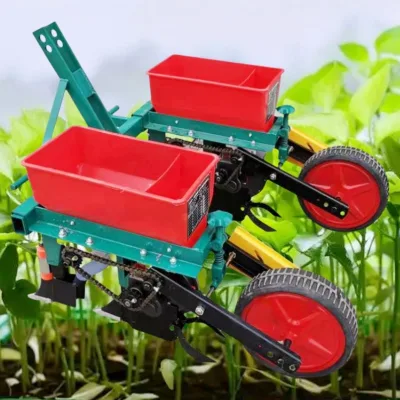
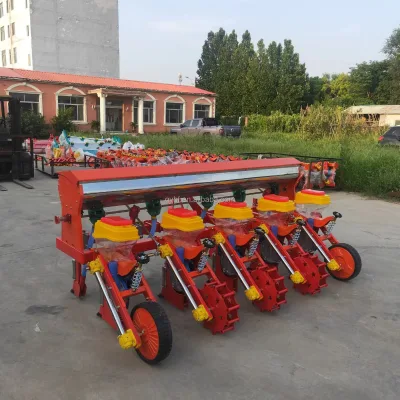
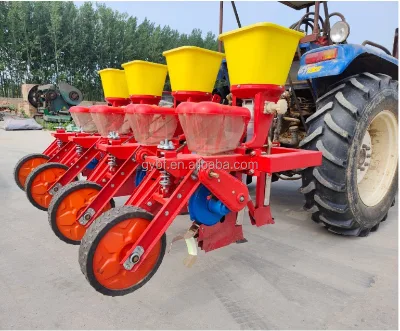
Corn Precision Seeder with Fertilizer 2-8 Rows Maize Planter Soybean Seeder
$880.00 - $1680.00
MOQ: 2 Pieces


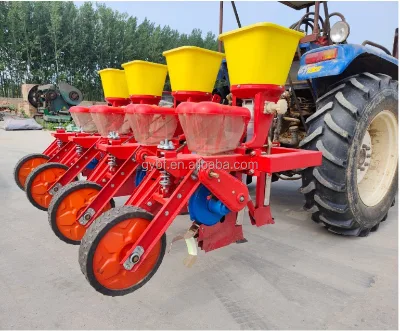
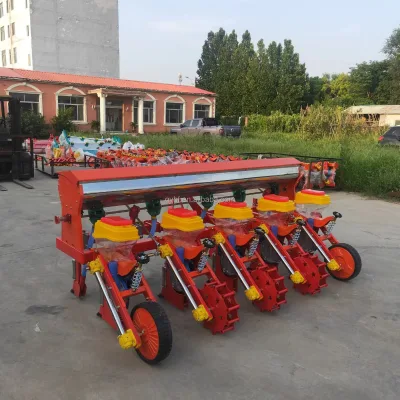
Corn and Wheat Seeder Maize and Wheat Dual-Use Planter Dual Purpose Seeder
$450.00 - $500.00
MOQ: 1 Pieces


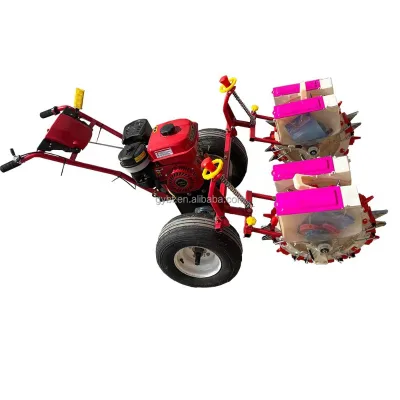
Multi-Functional Home Farm Use Wheat Planter New Condition Corn Seeder
$100.00 - $120.00
MOQ: 1 Pieces




Comprehensive Sourcing Guide
Strategic Sourcing Guide for Tractor-Powered Precision Corn and Soybean Planters
The global agricultural sector continues to demand high-efficiency machinery that bridges the gap between manual labor and fully autonomous systems. For buyers specifically researching tractor-powered precision corn and soybean planters, the procurement landscape is defined by a diverse array of semi-automatic and automatic configurations. These machines are engineered to optimize seed placement, fertilizer application, and soil interaction, directly influencing crop yield and operational costs. This guide provides a disciplined, evidence-based framework for evaluating potential suppliers and selecting equipment that meets rigorous agronomic and operational standards. The focus remains on technical verification, compliance checks, and long-term value rather than speculative market claims.
Technical Architecture and Operational Specifications
The core functionality of a tractor-powered planter relies on the integration of the power source with the seeding mechanism. In the observed market, these units are predominantly designed to be mounted via a three-point linkage system, ensuring compatibility with a wide range of agricultural tractors. The power source is explicitly identified as the tractor itself, meaning the planter does not carry an independent engine but utilizes the tractor's power take-off (PTO) or hydraulic system for operation. This design choice significantly reduces the overall weight and fuel consumption of the unit while maximizing torque transfer for heavy-duty field tasks.
Operational parameters vary based on the specific model and intended crop. For precision planting of corn and soybeans, the number of rows is a critical specification. Available configurations in the current supply pool include 5-row units and models capable of 8 rows, with some flexible systems supporting 3 to 12 rows depending on the specific customization. The row spacing is a vital metric for crop health; observed data indicates a standard range of 550 to 700 mm for certain semi-automatic models, while other configurations offer adjustable spacing between 45 and 65 cm. This adjustability allows farmers to align the planter with specific soil conditions and crop rotation requirements.
The sowing mechanism itself is another primary differentiator. The market features several distinct types, including finger pickup seed meters, drilling seeders, and dibble seeders. The finger pickup type is often associated with metallic material construction, designed for durability and consistent seed metering. The function of these machines often extends beyond simple sowing; many units are dual-purpose, combining seeding and fertilization in a single pass. This dual capability is essential for efficiency, reducing the number of passes required over the field. The ditching mode, which refers to how the soil is opened for seed placement, can be either intermittent or continuous. Intermittent ditching is suitable for specific soil types where continuous furrowing might cause excessive soil disturbance, while continuous ditching offers a smoother operation for uniform fields.
Compliance, Certification, and Regulatory Standards
When sourcing agricultural machinery, verifying compliance with international and regional standards is non-negotiable. The supply chain for these planters includes units that have undergone various certification processes. A recurring observation in the product data is the presence of ISO9001 certification, which indicates that the manufacturer adheres to quality management system standards. Some suppliers also list additional certifications such as CE (Conformité Européenne), GMP (Good Manufacturing Practice), QS, and UL. While the presence of these marks suggests a commitment to safety and quality, buyers must verify the validity of these certificates for the specific batch of equipment being purchased.
Product standards also encompass physical dimensions and packaging requirements. Observed specifications reveal that dimensions can vary significantly; for instance, some units are listed with a standard size of 1600mm x 1300mm x 1500mm, while others have compact dimensions of 2380mm x 760mm x 800mm. These variations are often tied to the specific model, such as the 2BYFZF-4 or 2BXYF series. Buyers must ensure that the physical footprint of the machine aligns with their storage facilities and transport logistics. Furthermore, the condition of the equipment is a critical factor; the market data consistently lists these units as "New," but buyers should confirm the manufacturing date and storage conditions to ensure no degradation has occurred prior to delivery.
Cost Drivers and Pricing Dynamics
The pricing of tractor-powered precision planters is influenced by a complex interplay of factors, including row count, mechanization level, and customization options. The observed price range in the market spans from 75 USD to 1999 USD. This wide disparity suggests that the listed prices may reflect different unit types, such as individual components versus full machine assemblies, or may be indicative of specific promotional offers and regional pricing strategies. It is imperative for buyers to clarify exactly what is included in the quoted price. Does the cost cover the full frame, the seed metering system, the fertilizer attachment, and the necessary mounting hardware?
Minimum Order Quantity (MOQ) is another significant cost driver. The observed MOQ range is between 1 and 10 units. This flexibility allows smaller farms to purchase a single unit for immediate deployment, while larger operations can leverage bulk purchasing to negotiate better terms. However, buyers should be aware that lower MOQs might come with higher per-unit costs due to setup and logistics expenses. Customization is frequently listed as "Available," which can impact the final price. Requests for specific row spacings, unique seed meter types, or specialized packing (such as wood crates versus iron net boxes) will likely incur additional charges.
Typical Applications and Agronomic Suitability
The versatility of these planters is one of their most attractive features for modern agriculture. The primary application fields include general agriculture, forestry, livestock, and aquaculture, though the specific machinery discussed is most relevant to crop production. The observed application list explicitly includes corn, wheat, rice, beans, and peanuts. This broad compatibility means that a single machine can often be adapted for multiple crop rotations, maximizing the return on investment. For corn and soybean planting, the precision of the seed meter and the consistency of the row spacing are paramount to ensure optimal plant population and yield potential.
The operating speed and field efficiency are also critical for application suitability. Data indicates an operating speed range of 6 to 8 km/h, which is typical for precision planting operations that require careful seed placement. The field efficiency is recorded between 0.68 and 1.8 hectares per hour. These figures suggest that the machine is designed for moderate-speed operations where precision is prioritized over raw speed. The maximum working depth is specified between 140 and 160 mm, which is suitable for a wide range of soil types and seed depth requirements for corn and soybeans. Buyers should verify that the specific model they select can achieve the required depth in their local soil conditions, as soil hardness and moisture content can affect performance.
Supplier Evaluation and Quality Assurance
Evaluating suppliers requires a meticulous approach to verifying the origin and manufacturing capabilities of the equipment. The product origin data points to specific regions in China, including Shannxi (Xi'an) and Dezhou. While these locations are known for manufacturing, buyers must conduct due diligence to ensure the supplier has a proven track record of quality control. The condition of the product is listed as "New," but this should be corroborated with inspection reports or factory audit results.
Quality control measures should be a central part of the procurement process. Buyers should request detailed specifications regarding the materials used, such as the metallic material mentioned for seed meters, and verify the durability of the frame packing or wood packaging. The presence of certifications like ISO9001 is a positive indicator, but it should be treated as a baseline requirement rather than a guarantee of performance. It is essential to ask for test results or performance data specific to the model being purchased. For example, if a supplier claims a specific field efficiency, they should provide evidence from field trials or third-party testing.
Long-Term Procurement and Maintenance Considerations
Procuring a tractor-powered planter is a long-term investment that requires careful consideration of maintenance and lifecycle costs. The mechanization level, whether semi-automatic or automatic, dictates the complexity of the machine and the level of technical expertise required for operation and maintenance. Semi-automatic models may offer a balance between cost and functionality, while automatic models might provide higher precision but require more sophisticated maintenance.
The power requirement is another long-term factor. Some models are specified with a 40HP power requirement, which implies the need for a tractor with sufficient horsepower to drive the planter effectively. Buyers must ensure their existing fleet or planned tractor purchases meet these power specifications to avoid operational bottlenecks. Additionally, the packing method, such as frame packing or iron net boxes, affects the ease of transport and storage. Proper packaging is essential to prevent damage during transit, which can lead to costly repairs or delays.
In conclusion, sourcing a tractor-powered precision corn and soybean planter involves a detailed analysis of technical specifications, compliance standards, and supplier capabilities. By focusing on verified data regarding row spacing, seed meter types, and operating speeds, buyers can make informed decisions that align with their agronomic needs. The wide range of available models, from 5-row to 12-row configurations, offers flexibility for various farm sizes. However, the key to successful procurement lies in rigorous supplier evaluation, clear definition of requirements, and a commitment to quality assurance throughout the supply chain.
FAQs
What is the operating speed range for these planters?
The operating speed range is 6 to 8 km/h. This moderate speed ensures precise seed placement while maintaining field efficiency between 0.68 and 1.8 hectares per hour for optimal crop yield.
Which row configurations are available for these machines?
Available configurations include 5-row units, 8-row models, and flexible systems supporting 3 to 12 rows. Buyers can select based on specific field requirements and crop rotation needs.
Can these planters be customized for specific crops?
Yes, customization is available for various applications including corn, wheat, rice, beans, and peanuts. The machines can be adapted with different seed meters and row spacings to suit specific agronomic conditions.
What certifications do the manufacturers typically hold?
Manufacturers typically hold ISO9001 certification, with some also listing CE, GMP, QS, and UL marks. These certifications indicate adherence to quality management systems and safety standards for agricultural machinery.
How is the power source connected to the planter?
The power source is a tractor connected via a three-pointed mounted linkage system. This design utilizes the tractor's power take-off or hydraulic system, reducing weight and fuel consumption during operation.
What is the maximum working depth of these seeders?
The maximum working depth ranges from 140 to 160 mm. This depth is suitable for a wide range of soil types and ensures proper seed placement for crops like corn and soybeans.